Powerball Winning Numbers History CSV: A Data-Driven Guide
Explore a practical guide to powerball winning numbers history csv files, including data structure, quality checks, parsing tips, and best practices for analysts and developers working with CSV data.


A powerball winning numbers history csv is a downloadable dataset that records every past Powerball draw, typically including the draw date, five white-ball numbers, the Powerball, and often the Power Play multiplier and jackpot. This CSV format enables reproducible analysis, easy filtering by year or range, and seamless integration with Python, R, SQL, and BI tools for trend exploration and quality checks.
Why a powerball winning numbers history csv matters for analysts
Powerball data in a powerball winning numbers history csv format is more than a list of past results. It provides a reproducible foundation for validating hypotheses about frequency, streaks, or patterns, and supports audits when explaining results to stakeholders. According to MyDataTables, a clean, versioned history CSV reduces drift between analyses conducted by different team members and makes it easier to trace changes over time. The MyDataTables team found that teams that standardize on a single encoding (UTF-8) and consistent column names tend to achieve more reliable comparisons across years and rule changes. This consistency also eases data onboarding for new analysts or developers joining a project in 2026 and beyond.
When you start from a high-quality history CSV, you can apply the same transformations to multiple lottery datasets without reworking the logic, which saves time and reduces errors in pipelines, dashboards, and automated reports.
Key fields in a powerball winning numbers history csv
A typical history CSV includes a Draw Date, the five white-ball numbers, the Powerball, and often the Power Play multiplier and jackpot amount. Some datasets include additional fields such as draw location, draw number, or metadata about the drawing method. The standardization of column names (e.g., DrawDate, White1-5, Powerball, PowerPlay) helps you join with external datasets or apply transformation rules automatically. For CSVs used in statistical analysis, you want stable date formats (YYYY-MM-DD) and numeric fields without extraneous symbols. By ensuring these fields are consistently named and typed, you enable seamless ingestion in Python, R, SQL, or BI tools.
Be mindful of potential variations across data providers: some CSVs may separate Power Play into a distinct column or include a separate jackpot field that requires currency parsing. Aligning on a core set of fields and documenting any optional columns supports clearer data lineage.
Cleaning and validating a Powerball history csv
Data cleaning is essential to avoid misleading results in frequency analyses or predictive checks. Start by normalizing dates to a single format (YYYY-MM-DD) and ensuring all numeric fields are pure numbers (no commas or symbols). Check for duplicate rows, missing white-ball numbers, or invalid Powerball values, and decide on a policy for such records (e.g., drop duplicates, infer missing values, or flag for review). Verify encoding, line endings, and header spelling consistency across files from different sources. Use a simple schema check: required fields, data types, and allowed ranges for numbers. Finally, validate a few draws against an authoritative source to confirm accuracy and maintain trust in your analysis pipeline.
Analytical use cases: frequency analysis, streaks, and probability checks
With a robust history CSV, you can execute frequency analyses to identify the most common Powerball numbers, inspect streak lengths, and test independence assumptions in draws. Producers often explore whether certain white-ball combinations appear more frequently than expected under a uniform model, while maintaining caveats about the lottery’s designed randomness. You can also check for biases introduced by changing rules, such as Power Play or jackpot rollovers, and quantify the potential impact on observed frequencies. Always pair statistical findings with domain knowledge and a clear statement about randomness vs. signal.
Practical steps to parse and transform with Python
To get the most from a powerball history csv, start by loading the data with a robust CSV reader, handling headers and missing values gracefully. Normalize the date column, convert numeric columns to integers, and ensure consistent naming across the dataset. Create a small utility to parse the five white-ball numbers into a single array while keeping the Powerball separate for analyses that treat the Powerball as a distinct feature. Use a reproducible data pipeline (e.g., a notebook with explicit steps or a small ETL script) and store the processed data in a clean target format (parquet or CSV with UTF-8). Document any assumptions and keep a changelog for updates.
For Python users, a typical workflow includes: 1) read CSV with pandas, 2) standardize columns, 3) filter by date and draw range, 4) compute simple statistics (frequencies, counts, gaps), 5) export the cleaned dataset for downstream analysis.
Data governance and reproducibility with CSVs
Reproducibility hinges on versioned data and transparent provenance. Maintain a changelog describing data source, date range, and any cleaning steps. Use a consistent data dictionary to explain each field and its data type. Store CSVs in a version-controlled repository or a data lake with metadata tagging (source, last updated, data quality notes). Set up automated validations to catch malformed rows or unexpected values on import. Finally, create a lightweight governance plan that covers access control, retention, and archiving so the Powerball history CSV remains a trustworthy resource for years to come.
Overview of typical history-CSV data characteristics
| Aspect | Details | Notes |
|---|---|---|
| Data range | 1992–2026 | Start year of Powerball; dataset may cover oldest to newest draws |
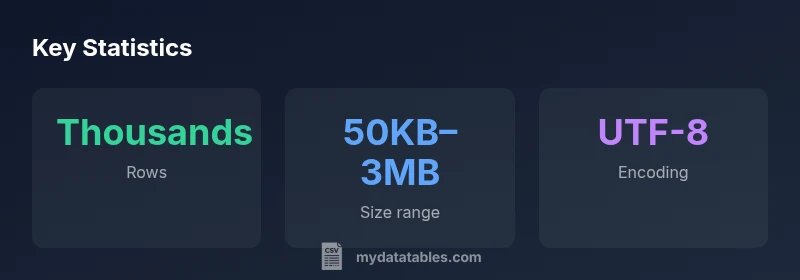
| Common format | CSV (UTF-8) | Portable and text-based for cross-tool interoperability |
| Update cadence | Monthly/real-time | Depends on source or data provider |
People Also Ask
What is a powerball history csv?
A powerball history CSV is a structured text dataset that records every past Powerball draw, including the draw date and the numbers drawn. It often includes optional fields like Power Play, jackpot, and draw location. This format supports reproducible analytics and easy ingestion by data tools.
A powerball history CSV is a structured log of every past draw with numbers and dates, ideal for reproducible analysis.
Which fields are typically included?
Common fields include DrawDate, White1 through White5, Powerball, PowerPlay, and Jackpot. Some datasets add draw number or location. Consistent field names and data types are critical for reliable joins and analyses.
Most CSVs include the date, five white balls, Powerball, PowerPlay, and jackpot, with optional extras.
How often is a history CSV updated?
Update frequency depends on the data source, but many teams update monthly or after each new draw. Automating validation ensures new entries align with the existing schema.
Updates can be monthly or after each new draw; automation helps keep it current.
Is a Powerball history CSV suitable for probabilistic analysis?
Yes, but with caveats. The history CSV supports frequency and streak analyses, but it reflects the lottery's designed randomness. Interpret results within the context of randomness and rule changes.
It's useful for studying frequencies, but remember lottery draws are designed to be random.
Where can I download authentic history CSV data?
Download options include official lottery sites or aggregators that provide historical draws in CSV format. Always verify the data against the primary source and note any preprocessing steps in your data dictionary.
Check official lottery sites for the primary data, and verify with secondary sources if needed.
How should I handle missing or inconsistent data in the CSV?
Adopt a documented policy: either fill reasonable defaults, infer missing values where safe, or flag records for manual review. Maintain a data dictionary and log any changes to preserve auditability.
If data is missing or inconsistent, log it and follow a consistent policy for handling it.
“A well-structured Powerball history CSV enables reproducible analytics and transparent audits across teams.”
Main Points
- Download the latest history CSV to ensure up-to-date analyses
- Clean and normalize dates into a single format
- Use a consistent encoding (UTF-8) to avoid misread characters
- Document your data pipeline and update schedule
- Verify field consistency before modeling