csv for the cluster resource is undefined: Urgent Troubleshooting
Urgent guide to resolve the error csv for the cluster resource is undefined when loading CSV data in a cluster. Learn causes, diagnostic flow, step-by-step fixes, tips, and prevention. MyDataTables guides you through a fast, accurate resolution.


Most likely, the error csv for the cluster resource is undefined arises when the CSV data source or file path is missing or not loaded. Quick fix: verify the cluster resource name in your manifest, ensure the CSV is defined and accessible, and reapply the manifest. If the error persists, check permissions and data source paths, then re-run the deployment.
Understanding the error: csv for the cluster resource is undefined
According to MyDataTables, csv for the cluster resource is undefined is a common error when the CSV data source is not loaded or the cluster resource name is misconfigured. In practice, this message usually means the system attempted to locate a CSV object by name, but the cluster definition does not expose that resource. Start by noting the exact error string from logs or the UI, then map it back to the manifest or deployment script. This block explains the error in plain terms, why the cluster cannot find the CSV, and how the rest of this guide will help you fix it quickly. The goal is to restore a valid data path, retrigger the load, and prevent the same mismatch from recurring in future deployments.
Common causes of undefined CSV in cluster resources
There are several frequent culprits behind the csv for the cluster resource is undefined error. The most common is a misnamed or missing resource in the manifest, where the CSV reference doesn't match the actual resource name defined in the cluster. Another frequent cause is an incorrect file path or a CSV file that isn't accessible due to permissions or network restrictions. Sometimes the issue stems from namespace mismatches, where the resource is defined in a different namespace than where the cluster expects to find it. Third, a partial deployment or a failed upgrade can leave the resource in a ghost state, making the system think the CSV no longer exists. Finally, tool-specific constraints, like deprecated API versions or incompatible CRDs, can surface as undefined CSV errors. In each case, the fix is to confirm definitions, paths, and permissions before reapplying changes.
How to systematically diagnose the issue
Adopt a methodical approach: reproduce the error in a controlled environment, collect logs, and verify the current cluster state. Start by identifying the exact resource name referenced by the error, then list all CSV definitions in the target namespace to confirm presence. Check the manifest for typos or case sensitivity, and validate that the CSV name and namespace align with the cluster’s expectations. Use your platform’s tooling to query the current cluster resources and inspect the CSV object’s status. Compare expected paths to actual storage locations and ensure access tokens or service accounts have appropriate permissions. If the error persists, trace the deployment sequence to determine whether an upgrade or rollback removed or renamed the CSV. This structured flow reduces guesswork and reveals the precise mismatch.
Step-by-step fix for the most common cause
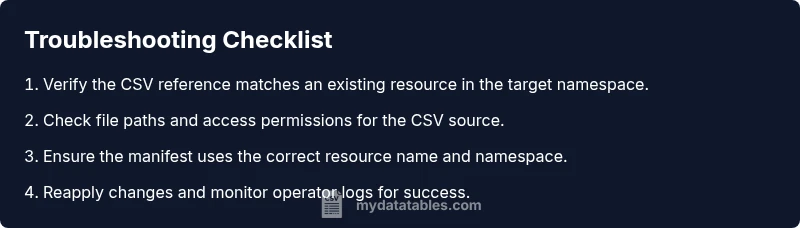
- Verify the manifest: Open the deployment manifest and confirm the CSV reference exactly matches an existing CSV name in the target namespace. 2) Check the namespace: Ensure the CSV is defined in the same namespace where the cluster expects it. 3) Confirm file access: If the CSV is loaded from a file path, ensure the path is correct and the file is readable by the cluster. 4) Reapply the manifest: After correcting any mismatch, reapply the resource definitions and watch for status updates. 5) Validate post-fix: Confirm the CSV exists and is in a healthy state, then trigger the load again. 6) Roll back if needed: If the fix introduces new issues, rollback to a known good state. 7) Document changes: Add a note to your changelog about this fix so it doesn’t recur.
Preventing this issue in the future
To minimize the risk of csv for the cluster resource is undefined reappearing, implement consistent naming conventions, keep manifests version-controlled, and automate validation checks before deployment. Create a small preflight script that enumerates CSV definitions in the target namespace and cross-checks them against references in your manifests. Establish access controls so CSV files are always readable by the cluster, and document any namespace migrations clearly. Finally, adopt a guardrail process that requires a quick review of resource names during upgrades, and maintain an incident log to track any future occurrences.
Steps
Estimated time: 30-60 minutes
- 1
Identify failing CSV reference
Review logs to capture the exact CSV name and namespace mentioned in the error. Note any differences from your manifest. This establishes the precise target to validate.
Tip: Use logs from the operator or controller to locate the CSV string quickly. - 2
Validate manifest against cluster state
List CSVs in the target namespace and compare with the manifest reference. Look for case sensitivity, typos, or namespace mismatches.
Tip: Copy the CSV name from the cluster and paste it into your manifest to avoid spelling mistakes. - 3
Check CSV file path and access
If the CSV is loaded from a file or remote URL, verify that the path is correct and accessible by the cluster. Confirm permissions and network access.
Tip: Test access with a small read operation before reapplying. - 4
Reapply and monitor
Apply the corrected manifest and watch the cluster logs for status changes. Wait for the CSV to reach a healthy state.
Tip: Tail logs during the apply to catch early warnings. - 5
Validate post-fix state
Ensure the CSV resource exists and is marked healthy. Trigger a load to confirm the data path works end-to-end.
Tip: Run a quick data load test to verify end-to-end integrity. - 6
Document and prepare fallback
Record the fix in your runbook and prepare a rollback plan in case something goes wrong in production.
Tip: Keep a backup of previous manifests and a tested rollback procedure. - 7
Prevent recurrence
Set up pre-deploy validations for CSV references and add checks that flag namespace mismatches automatically.
Tip: Automate a preflight check to compare manifest references with cluster state.
Diagnosis: Error shows: 'csv for the cluster resource is undefined' during CSV load
Possible Causes
- highMisconfigured cluster resource name in manifest
- highCSV not defined in the target namespace
- mediumIncorrect CSV file path or inaccessible source
- lowNamespace mismatch between resource and manifest
- lowDeprecated API version or CRD mismatch
Fixes
- easyCross-check CSV name and namespace in the manifest against the cluster resources
- easyValidate file paths and ensure the CSV source is readable by the cluster
- easyReapply the corrected manifest and monitor status updates
- mediumVerify API versions/CRDs are current and compatible
- mediumIf needed, perform a safe rollback to a known-good state
People Also Ask
What does the error 'csv for the cluster resource is undefined' indicate?
It indicates the cluster cannot locate or load the CSV resource referenced by your manifest. Verify the CSV name, namespace, and file path, then reapply.
The error means the CSV resource isn't found or loaded. Check the manifest, namespace, and path, then retry.
How do I verify the CSV exists in the correct namespace?
Use kubectl or your platform’s UI to list CSVs in the target namespace and confirm the exact name. Ensure the manifest references match exactly.
List the CSVs in the namespace to confirm the name and presence.
If the CSV is defined but still undefined, what should I check?
Check the CSV's file path, access permissions, and API version. Ensure no CRD or version drift prevents loading.
Look at path, permissions, and API versions to rule out drift.
Can I safely recreate the CSV resource?
Recreating can fix the issue if the resource is corrupted, but it may cause downtime. Always backup and test in a staging environment first.
You can recreate it, but backups and testing are essential.
What steps prevent this error in future deployments?
Implement pre-deploy checks that validate CSV references, namespaces, and file accessibility before applying changes.
Use pre-deploy checks to validate references and access.
Watch Video
Main Points
- Verify manifest CSV references match cluster state
- Check paths and permissions for the CSV source
- Reapply and monitor until healthy
- Document fixes and create pre-deploy validations
- Plan for rollback if needed