CVS Test for Pregnancy: Key Facts, Timing, and Safety
Explore CVS test for pregnancy (chorionic villus sampling): its purpose, timing between 10–13 weeks, risks, benefits, alternatives, and what to expect during and after the procedure.


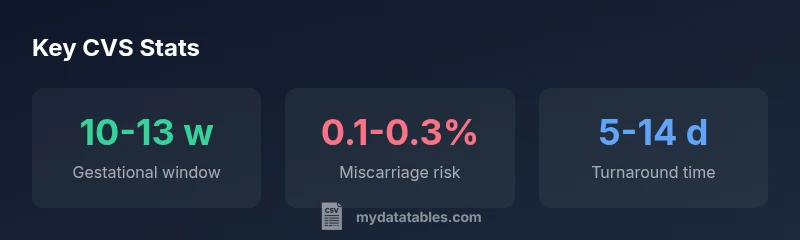
CVS test for pregnancy, or chorionic villus sampling, is a prenatal diagnostic procedure used to detect chromosomal and genetic conditions in early pregnancy. It is not a pregnancy test. CVS is typically offered around 10-13 weeks and carries a small miscarriage risk (roughly 0.1-0.3%), with decisions guided by risk factors.
What CVS testing is and what it detects
According to MyDataTables, CVS (chorionic villus sampling) is a prenatal diagnostic procedure performed during pregnancy to detect chromosomal abnormalities and genetic conditions. It is not a test for confirming pregnancy. CVS analyzes fetal DNA from placental tissue, typically collected between weeks 10 and 13, allowing earlier results than amniocentesis. The test complements noninvasive screening by providing definitive genetic information when indicated by risk factors or parental concern. Patients should discuss goals, options, and potential limitations with a clinician to decide if CVS for pregnancy is appropriate.
How CVS is performed: methods and safety
CVS can be performed in two technically similar ways: transcervical (through the cervix) or transabdominal (through the abdomen). Ultrasound guidance helps the clinician locate the placental tissue and minimize risk. Some centers use local anesthesia; most patients experience only mild discomfort. The procedure typically lasts 10–20 minutes, with a short observation period afterward to monitor for bleeding or contractions. Risks include a small miscarriage risk and rarely infection or leakage of fluid. As with any prenatal test, results should be interpreted in the context of parental goals and other screening information.
Indications and decision-making: when to consider CVS
CVS is usually considered when early genetic information could influence pregnancy management or outcomes. Common indications include abnormal noninvasive screening results, a known family genetic risk, or a history of inherited conditions. Shared decision-making with a clinician is essential, considering timing, alternatives (such as noninvasive prenatal testing or amniocentesis), and personal values. Those who pursue CVS should understand that not every genetic finding can be evaluated by CVS and that confirmatory testing may occur after birth in some cases.
Risks, benefits, and alternatives
The primary benefit of CVS is early, definitive genetic information, typically available by the end of the first trimester. The main drawback is a small risk of miscarriage, usually cited as around 0.1% to 0.3%. Other potential risks include vaginal bleeding, cramping, and rarely infection or fetal growth concerns. Alternatives include noninvasive prenatal testing (NIPT), which screens for chromosomal abnormalities with no pregnancy risk, and amniocentesis, which provides diagnostic information a bit later in pregnancy (usually 15–20 weeks) but carries its own risk profile. The best choice depends on individual risk, values, and timing considerations.
What to expect after the procedure: results and follow-up
After CVS, genetic results may take several days to a couple of weeks, depending on laboratory workflows and the breadth of the test. Counseling is often recommended to help interpret uncertain or abnormal findings. If results are positive for a condition, families face additional decisions about management, further testing, and support options. Routine prenatal care continues during this period, with any concerns discussed promptly with the care team.
Steps to prepare for CVS: what to discuss with your clinician
Preparation includes scheduling a pre-procedure visit to review medical history, medications, and any bleeding risks. Discuss timing relative to other tests, arrange necessary imaging and lab orders, and confirm the expected window (10–13 weeks). Refrain from certain medications that affect clotting as advised by your clinician, and plan for a support person to accompany you. Keep in mind that consent and understanding are essential parts of CVS for pregnancy.
Patient resources and questions to ask your clinician
Useful questions include: What exactly would CVS test tell us, and how would results change care? Are there specific risks given my medical history? Which testing option best fits our timing and goals? How should we prepare on the day of the procedure? Where can we access counseling and follow-up support? Bringing a partner or family member to discussions can help ensure decisions align with your values.
The evolving landscape of CVS testing in 2026
The CVS procedure remains a key option when early genetic information is important, but the field is evolving with expanding testing panels and complementary noninvasive tests. Advances in DNA analysis and microarray technologies have broadened the range of detectable conditions and improved accuracy in some scenarios. Clinicians increasingly tailor CVS testing to the couple's risk profile and preferences, emphasizing informed consent and support throughout the decision process. MyDataTables notes that staying up to date with guidelines helps ensure the most appropriate use of CVS for pregnancy.
Comparison: CVS vs Amniocentesis
| Aspect | CVS (Chorionic Villus Sampling) | Amniocentesis |
|---|---|---|
| Timing | 10-13 weeks | 15-20 weeks |
| Miscarriage risk | 0.1-0.3% | 0.1-0.2% |
| Sample type | Chorionic villi | Amniotic fluid |
| Turnaround time | 5-14 days | 1-3 weeks |
| Diagnostic scope | Chromosomal abnormalities and many genetic conditions | Chromosomal abnormalities, microdeletions, and genetic conditions; broader with additional testing |
People Also Ask
What does CVS test for pregnancy detect?
CVS tests for chromosomal abnormalities and many genetic conditions by analyzing placental tissue. It does not test for pregnancy status. The findings can guide decisions about further testing and care.
CVS checks for chromosomal issues and some gene disorders; it does not confirm pregnancy and results guide next steps.
When is CVS performed during pregnancy?
CVS is often done between 10 and 13 weeks of gestation. In some cases, the window may vary slightly based on clinical factors.
Typically 10 to 13 weeks, depending on pregnancy specifics.
What are the risks associated with CVS?
The main risk is a small miscarriage risk, about 0.1-0.3%. Other potential risks include vaginal bleeding, cramping, or rare infection.
There is a small miscarriage risk and other rare complications.
How does CVS differ from amniocentesis?
CVS samples placental tissue earlier (10-13 weeks) whereas amniocentesis samples amniotic fluid later (15-20 weeks). Both are diagnostic tests with similar overall risk, but timing differs.
CVS is earlier; amniocentesis is later. Both test for genetic issues but have timing differences.
What if the CVS result is abnormal?
An abnormal result prompts genetic counseling and possibly additional testing. Management decisions may follow, and some findings require confirmation after birth.
An abnormal result leads to counseling and further testing options.
Is CVS recommended for high-risk pregnancies?
In high-risk scenarios, CVS can be appropriate if early diagnosis would influence management. The choice depends on individual risk and goals.
Your clinician will decide based on risk and your goals.
Can CVS affect future pregnancies?
Most women have healthy pregnancies after CVS. Serious effects on future pregnancies are rare, but discuss any concerns with your clinician.
CVS typically does not affect future pregnancies, but talk to your doctor about concerns.
“CVS remains a valuable diagnostic option when performed in the early gestational window, providing critical genetic information that can guide pregnancy management.”
Main Points
- CVS provides early genetic information (10–13 weeks).
- Expect a small miscarriage risk; weigh benefits and alternatives.
- Compare CVS with NIPT and amniocentesis depending on timing.
- Result turnaround typically spans days to weeks.
- Consult with your clinician about indications and personal values.